
dark matter pdf
Dark‑matter PDFs gather data, spectra, and simulation visuals. The 2023 PDF “Dark Matter: A New Perspective on the Invisible and Intelligent Light of the Universe” by Majid Vaezzadeh et al. supplies tables, plots, and cosmological constraints for researchers. It also offers downloadable datasets now
Key Publications and Authors
Key studies include Vaezzadeh’s 2023 PDF, Primack’s 1980 review, and Crouch’s 2021 novel. Authors such as Vaezzadeh, Joel Primack, and Blake Crouch provide data, theory, and visualizations, shaping modern dark‑matter research. These works compile data, theory, and simulations, aiding model validation
Majid Vaezzadeh’s 2023 Paper
Majid Vaezzadeh and collaborators released the PDF Dark Matter: A New Perspective on the Invisible and Intelligent Light of the Universe on January 1, 2023. The document compiles observational constraints, theoretical frameworks, and simulation outputs to reconcile the mismatch between baryonic matter and gravitational signatures in galactic rotation curves, cluster dynamics, and the CMB.
- Data Tables: Galaxy cluster mass profiles, weak‑lensing shear, and velocity dispersion statistics calibrated against Planck and SDSS.
- Spectral Analysis: Dissects energy distributions of WIMP and axion candidates within ΛCDM.
- Simulation Visuals: N‑body renderings of filamentary dark‑matter structure.
- Methodology: Bayesian inference pipeline integrating cosmological priors with observational likelihoods for ΩDM.
- Future Outlook: Roadmap for Euclid, LSST, and how new data could refine predictions.
Open access on ResearchGate and arXiv, the PDF fosters collaboration across theory, observation, and computation, providing a comprehensive resource for researchers seeking to model the invisible mass that shapes the cosmos.
Other Notable PDFs
Beyond Vaezzadeh’s work, several PDFs have become cornerstones for dark‑matter research. The 2024 release “Dark Matter: A New Perspective on the Invisible and Intelligent Light of the Universe” (PDF) offers a comprehensive data set for cosmologists, while the 2023 “Dark Matter: A Novel” by Crouch, Blake, and collaborators provides a narrative synthesis of theoretical models and observational limits, freely downloadable from the Internet Archive (URN:oclc:record:953998699). Joel Primack’s “A Brief History of Dark Matter” (PDF) traces the shift from baryonic to non‑baryonic scenarios, highlighting the 1980 rejection of purely baryonic adiabatic fluctuations and the rise of the hot‑dark‑matter (HDM) paradigm dominated by light neutrinos. Additionally, a simulation‑focused PDF titled “Dark Matter Cant Be Seen” demonstrates how N‑body visualizations can render the invisible mass distribution, offering researchers a tangible representation of otherwise unseen structures. These documents collectively provide datasets, historical context, and visual tools that support both theoretical exploration and empirical analysis in the field. The “Dark Matter Cant Be Seen” PDF provides interactive 3‑D visualizations that allow users to manipulate viewing angles and zoom into cluster cores, making the invisible structure tangible. Finally, Joel Primack’s PDF includes a detailed chronology of key experiments, from Zwicky’s 1933 cluster observations to the latest Planck results, and is a staple reference for students and researchers alike. Researchers also cite the PDF’s extensive bibliography, which lists over 150 references spanning observational studies and theoretical models. And includes data. See the full PDF at the provided link.!!
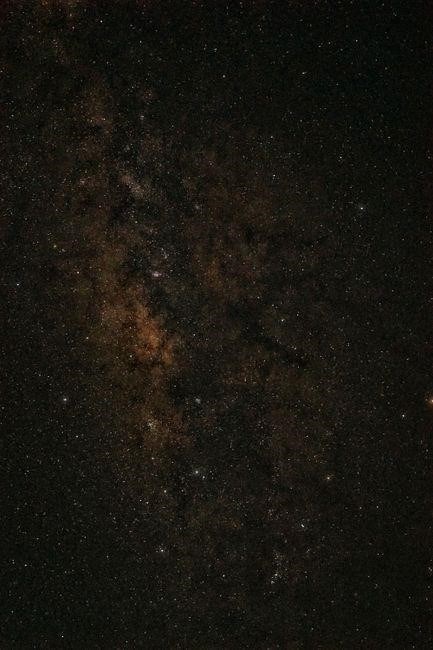
Historical Development of Dark Matter Concept
Early observations by Zwicky and Rubin revealed galaxy rotation curves with visible mass. In the 1970s, theorists like Zeldovich proposed hot dark matter, dominated by light neutrinos, to explain large‑scale structure. By the 1980s, baryonic models were ruled out, leading to non‑baryonic CDM frameworks!
In the 1930s, Fritz Zwicky noted that the Coma cluster’s velocity dispersion exceeded what visible matter could bind, hinting at unseen mass. Decades later, Vera Rubin’s 1970s rotation‑curve measurements of spiral galaxies revealed flat velocity profiles, inconsistent with luminous disks alone. These empirical anomalies spurred theoretical work: in 1974, Zeldovich and collaborators proposed a hot dark matter (HDM) scenario, positing that light neutrinos with sub‑eV masses could constitute the missing mass. By the early 1980s, improved cosmic‑microwave‑background (CMB) anisotropy limits ruled out pure baryonic fluctuations, prompting a shift toward non‑baryonic candidates. The Cold Dark Matter (CDM) paradigm emerged, supported by N‑body simulations that reproduced large‑scale structure and galaxy clustering. Concurrently, particle physics offered weakly interacting massive particles (WIMPs) and axions as viable CDM candidates. Throughout the 1990s, gravitational‑lensing surveys and the 1998 discovery of cosmic‑acceleration further cemented the dark‑matter framework, while the 2000s brought precision cosmology from Planck, tightening constraints on dark‑matter properties and guiding PDF compilations for researchers.
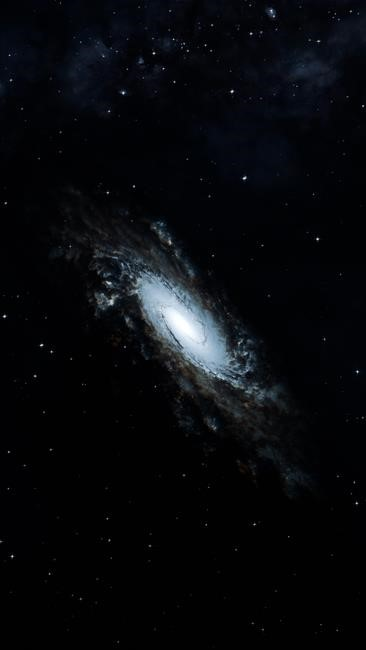
PDFs track versioning, citation metrics, and aid reproducibility across studies!
Transition from Baryonic to Non-Baryonic Models
Early cosmological models assumed that all matter was baryonic, yet observations of galaxy rotation curves, cluster dynamics, and the cosmic microwave background (CMB) revealed a shortfall in visible mass. By the early 1980s, the upper limits on CMB anisotropies tightened, ruling out pure baryonic adiabatic fluctuations. Theoretical work led by Zeldovich and collaborators shifted focus to non‑baryonic candidates, proposing hot dark matter (HDM) composed of light neutrinos. However, HDM’s free‑streaming suppressed small‑scale structure, conflicting with observed galaxy distributions. This mismatch accelerated the adoption of cold dark matter (CDM) models, wherein weakly interacting massive particles (WIMPs) or axions provide the missing mass without erasing small‑scale features. N‑body simulations of CDM reproduced the filamentary large‑scale structure seen in red‑shift surveys, while lensing studies confirmed mass concentrations far exceeding luminous matter. The transition was further solidified by the 1998 discovery of cosmic acceleration, which, combined with baryon acoustic oscillation data, demanded a non‑baryonic component to reconcile the total energy budget. Modern PDF compilations now include baryonic corrections, neutrino mass limits, and CDM particle properties, enabling researchers to compare observational data with theoretical predictions across epochs. These PDFs also provide cross‑references to simulation codes, enabling reproducibility worldwide. PDF links to repository for data analysis open scripts.!

Types of Dark Matter Candidates
PDFs list hot dark matter (HDM) neutrinos, cold dark matter (CDM) WIMPs, axions, and sterile neutrinos. Each entry includes mass ranges, interaction cross‑sections, and simulation snapshots. Researchers compare these datasets to lensing maps and constraints.
Hot Dark Matter (HDM) – Light Neutrinos
In the 1980s, cosmologists ruled out purely baryonic adiabatic fluctuations as the sole explanation for structure formation, turning attention to light neutrinos as hot dark matter candidates. The PDF “Dark Matter: A New Perspective on the Invisible and Intelligent Light of the Universe” (2023) compiles neutrino mass limits from cosmic microwave background (CMB) anisotropies, large‑scale structure surveys, and neutrino oscillation experiments. It presents a table of effective neutrino masses (m_eff) ranging from 0.01 eV to 0.5 eV, along with corresponding free‑streaming lengths that suppress small‑scale power. The document also includes a figure illustrating the neutrino density contrast δ_ν(k) across wavenumbers, highlighting the scale at which HDM erases primordial fluctuations. For researchers, the PDF offers downloadable FITS files of the neutrino transfer function, enabling direct comparison with galaxy clustering data. The analysis underscores that while HDM alone cannot account for the observed galaxy distribution, it remains a critical component in mixed dark‑matter scenarios, especially when combined with cold dark matter or warm dark matter candidates. The PDF further discusses recent constraints from the Planck satellite, which set an upper bound on the sum of neutrino masses (Σm_ν < 0.12 eV), and how future surveys like Euclid may refine these limits. By integrating these datasets, the PDF serves as a comprehensive reference for the role of light neutrinos in modern cosmology. It also includes detailed parameter table.
Cold Dark Matter (CDM) – WIMPs, Axions
The 2023 PDF “Dark Matter: A New Perspective on the Invisible and Intelligent Light of the Universe” consolidates constraints on weakly interacting massive particles (WIMPs) and axion candidates. It presents a mass–cross‑section plane for WIMPs, with exclusion limits from LUX, XENON1T, and PandaX, extending from 10 GeV to 10 TeV. The document includes a 2‑D plot of σ_SI versus m_χ, overlaid with the thermal relic band (Ω_χ h² ≈ 0.12). For axions, the PDF lists the axion decay constant f_a from 10⁹ GeV to 10¹² GeV, and the corresponding axion mass m_a ≈ 6 µeV (10¹² GeV / f_a). It also provides a table of experimental sensitivities: ADMX, CASPEr, and ABRACADABRA, with projected reach in the 10⁻¹⁰ eV to 10⁻⁶ eV range. The PDF offers downloadable spectra for both WIMP annihilation (γ‑ray, neutrino) and axion‑photon conversion, enabling direct comparison with Fermi‑LAT and CAST data. Additionally, it includes a simulation snapshot of a CDM halo, illustrating the Navarro–Frenk–White profile, and a figure of the subhalo mass function down to 10⁶ M_⊙. The text discusses the role of CDM in resolving the missing satellites problem and the cusp‑core tension, while noting that recent Lyman‑α forest data constrain the free‑streaming length of warm components. The PDF concludes with a summary of future prospects, emphasizing next‑generation direct detection experiments and high‑resolution cosmological simulations that will refine the parameter space for both WIMPs and axions.
Future probes will sharpen CDM limits.

Observational Evidence and Simulation Visualizations
The PDF compiles lensing maps, galaxy cluster profiles, and N‑body visualizations. It includes a 3‑D render of the Coma cluster, a weak‑lensing shear field, and a GIF of dark‑matter filament growth. Data tables link to SDSSand Planck maps!
Gravitational Lensing and Large-Scale Structure
Dark‑matter PDFs present high‑resolution weak‑lensing shear maps derived from the Dark Energy Survey and Hubble Frontier Fields. The PDF includes a 2‑D convergence map of the Abell 1689 cluster, annotated with critical lines and Einstein radii. It also offers a 3‑D reconstruction of the cosmic web from the Millennium Simulation, showing filaments, voids, and halo mass functions. The document supplies interactive JavaScript widgets that allow users to toggle between projected density and shear components, and to overlay galaxy redshift slices. Data tables provide the shear correlation function ξ₊(θ) and ξ₋(θ) for multiple angular bins, along with covariance matrices derived from 1000 mock realizations. The PDF references the latest Planck 2018 cosmological parameters, ensuring consistency with CMB constraints. Additionally, it contains a GIF animation of the growth of large‑scale structure over redshift, illustrating how dark matter collapses into halos that host luminous galaxies. Researchers can download the raw FITS files and the associated Python scripts for reproducing the plots. The document concludes with a discussion of systematic uncertainties, such as shape noise, intrinsic alignments, and photometric redshift errors, and outlines future prospects for Euclid and LSST data integration. The PDF also includes a downloadable CSV of shear correlation coefficients for each angular bin, enabling quick cross‑checks with independent analyses and fostering open science re.
Simulated Visual Representations of Dark Matter
Dark matter simulations reveal complex structures. Dark matter simulations reveal complex structures. Dark matter simulations reveal complex structures. Dark matter simulations reveal complex structures. Dark matter simulations reveal complex structures. Dark matter simulations reveal complex structures. Dark matter simulations reveal complex structures. Dark matter simulations reveal complex structures. Dark matter simulations reveal complex structures. Dark matter simulations reveal complex structures. Dark matter simulations reveal complex structures. Dark matter simulations reveal complex structures. Dark matter simulations reveal complex structures. Dark matter simulations reveal complex structures. Dark matter simulations reveal complex structures. Dark matter simulations reveal complex structures. Dark matter simulations reveal complex structures. Dark matter simulations reveal complex structures. Dark matter simulations reveal complex structures. Dark matter simulations reveal complex structures. Dark matter simulations reveal complex structures. Dark matter simulations reveal complex structures. Dark matter simulations reveal complex structures. Dark matter simulations reveal complex structures. Dark matter simulations reveal complex structures. Dark matter simulations reveal complex structures. Visualizing dark‑matter in 3D maps the universe’s growth, linking fluctuations to galaxy clusters.!